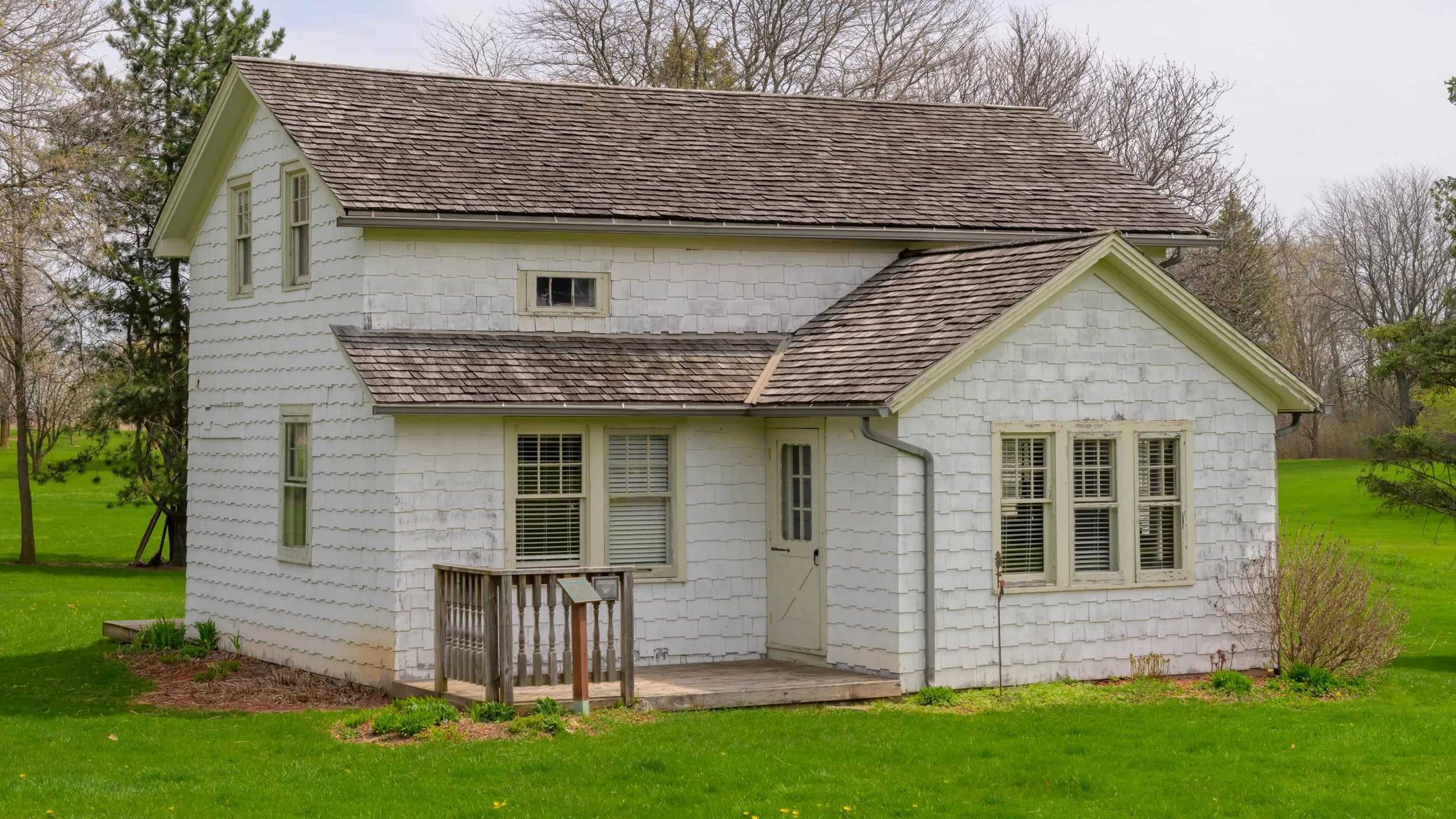
Steichen House
The Steichen House
A Home of Art, History, and Influence
The Steichen House at Old Falls Village Park is more than a preserved historic structure—it is a powerful link to two of the most influential figures in American cultural history: Edward Steichen and Carl Sandburg.
Originally constructed in the mid-1800s, the home became part of the Steichen family story in 1904, when Edward Steichen helped purchase it for his parents and his sister, Lilian. The family lived in the home until 1915, during a time when Edward’s artistic career was beginning to gain national attention.
Edward Steichen: A Pioneer of Photography
Edward Steichen is widely regarded as one of the most important photographers of the 20th century. Born in Luxembourg in 1879 and raised in the United States, he began his career as a painter before turning to photography in the 1890s.
Steichen became a central figure in the Photo-Secession movement alongside Alfred Stieglitz, helping establish photography as a legitimate art form. He later achieved international recognition as a fashion photographer for leading publications such as Vogue and Vanity Fair.
His influence extended beyond commercial and artistic photography. During World War I, he directed aerial reconnaissance photography for the U.S. Army. In World War II, he served as Director of the U.S. Naval Photographic Institute, overseeing combat photography that documented the war effort.
Following the war, Steichen became Director of Photography at the Museum of Modern Art in New York, where he curated The Family of Man—one of the most widely viewed photographic exhibitions in history, emphasizing the shared human experience across cultures.
Lilian Steichen and Carl Sandburg
The Steichen House also holds a unique place in literary history. It was here that Lilian Steichen—affectionately known as Paula—met Carl Sandburg in 1908.
Sandburg, who would later become one of America’s most celebrated poets and historians, was at the time working as an organizer for the Social-Democratic Party in Milwaukee. Their meeting sparked a relationship that grew through an exchange of letters, eventually leading to their marriage in June 1908.
The couple spent their first night together in this home.
Carl Sandburg would go on to win three Pulitzer Prizes—two for poetry and one for his extensive biography of Abraham Lincoln. His work remains a cornerstone of American literature.
Lilian Steichen Sandburg was equally accomplished. A Phi Beta Kappa graduate of the University of Illinois, she taught school, engaged in political activism, and later became nationally recognized for raising prize-winning dairy goats, earning top honors in national competitions.
A Story Preserved
Like many historic structures, the Steichen House faced the threat of demolition. Recognizing its cultural and historical significance, the home was relocated to Old Falls Village Park in December 2002.
After extensive restoration, the house was opened to the public, allowing visitors to explore its rich history firsthand. Today, the interior features exhibits on the Steichen family, as well as military memorabilia reflecting Edward Steichen’s service and contributions.
A Lasting Cultural Legacy
The Steichen House stands as a rare intersection of artistic innovation and literary achievement. It represents not only the early life of a pioneering photographer but also the personal beginnings of a Pulitzer Prize-winning writer.
Through its preservation, the house continues to tell a story of creativity, ambition, and the enduring impact of individuals who helped shape American art and culture.