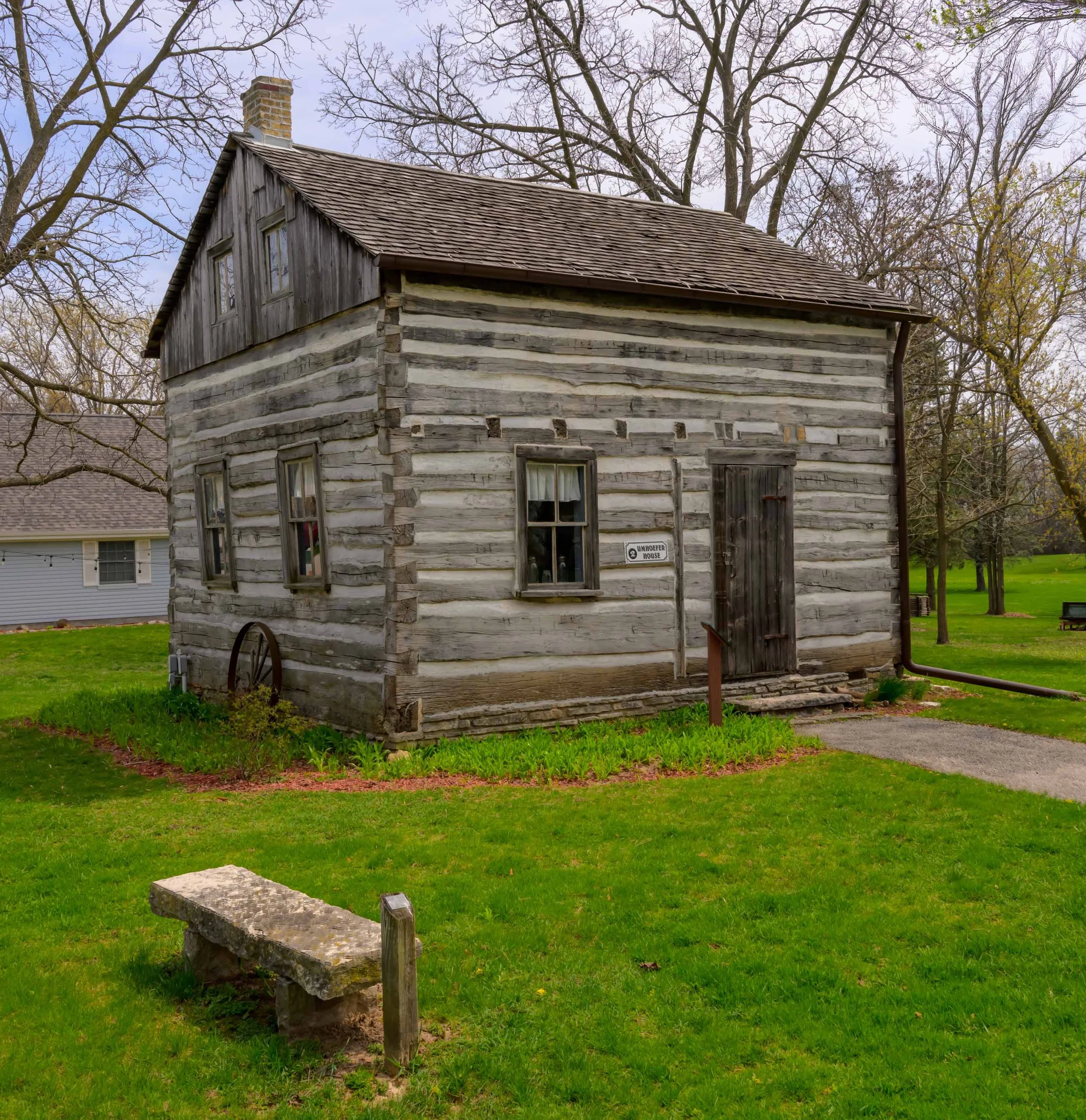
Umhoefer House
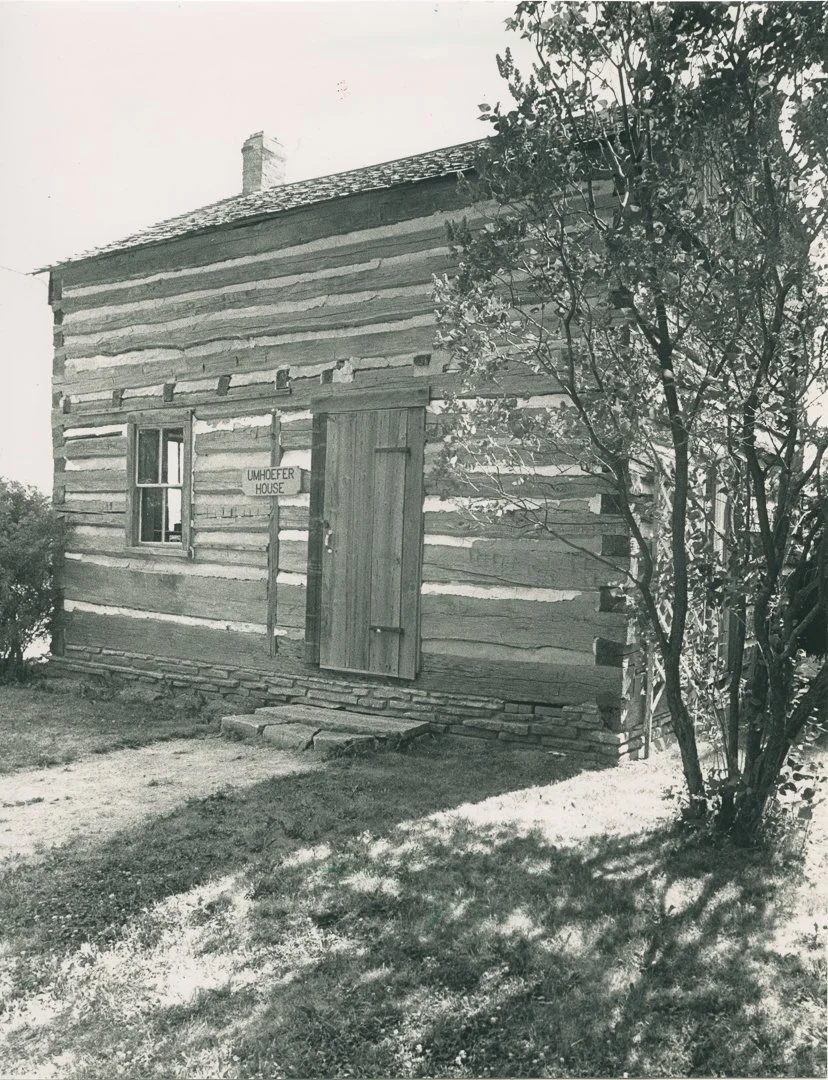
The Umhoefer Log Cabin
A Legacy of Immigration and Endurance
The Umhoefer Log Cabin at Old Falls Village Park stands as one of the most authentic representations of early settler life in Menomonee Falls. Built in 1856 by German immigrant Gregory Umhoefer, the cabin reflects both the challenges and the aspirations of families who helped shape Wisconsin’s early communities.
From Bavaria to Wisconsin
The Umhoefer family immigrated to the United States around 1848, part of a larger wave of German-speaking settlers seeking opportunity during a time of political unrest and economic hardship in Europe. Between 1820 and 1910, millions of German immigrants made their way to America, many settling in Wisconsin due to its fertile land and strong promotional efforts encouraging settlement.
Their journey would have taken weeks—crossing the Atlantic Ocean, traveling inland through New York and the Erie Canal, and eventually reaching Milwaukee before continuing into what was then the Town of Menomonee.
Building a Home for Generations
In 1856, Gregory Umhoefer constructed this log house on his 80-acre farm along Fond du Lac Avenue. Unlike the earliest one-room cabins, this structure represented a more advanced form of settlement housing. It featured two bedrooms on the second floor, a bedroom and living space on the ground floor, a basement, and a kitchen addition.
The home was built to last—and it did. The Umhoefer family occupied the house continuously for more than 100 years, raising multiple generations within its walls.
A particularly personal detail remains from this time: around 1865, a returning Civil War soldier—Anna Umhoefer’s brother—pressed his hand into wet plaster in the stairwell, leaving behind a handprint that still exists today.
Adapting to Change
As the family grew, additions were made to the home in the early 20th century, expanding its capacity. However, these later modifications were eventually removed during restoration efforts to preserve the cabin’s earlier historical appearance.
The surrounding farmland remained in the family until the mid-20th century, when construction of Interstate 41 began to reshape the landscape. Portions of the original property were lost, including the barn, signaling the end of the farm as it once existed.
Preservation and Relocation
In 1963, Hugo Umhoefer, grandson of the original builder, donated the cabin to the Village of Menomonee Falls for preservation. Recognizing its historical importance, the Menomonee Falls Historical Society worked to save and relocate the structure.
The cabin was moved to Old Falls Village Park in 1967 and formally dedicated on July 26, 1970. The dedication ceremony, attended by community leaders and residents, marked a significant milestone in preserving the area’s early history.
Furnishings inside the cabin were donated by local residents and help illustrate daily life in the mid-19th century.
A Reflection of Early Settlement Life
The Umhoefer Log Cabin represents more than a single family—it reflects the broader story of immigration, settlement, and community building in Wisconsin.
German immigrants like the Umhoefers played a central role in shaping the cultural and agricultural landscape of the region. Their homes, farms, and traditions became the foundation of many communities that still exist today.
A Living Piece of History
Today, visitors to Old Falls Village Park can explore the cabin and experience firsthand the simplicity and strength of pioneer life. From its log construction to the stories embedded within its walls, the Umhoefer Cabin offers a direct connection to the people who helped build Menomonee Falls.
It stands as a lasting reminder of resilience, family, and the enduring impact of those who came before.